
Nigeria’s U-17 champions receive presidential recognition as the Federal Government announces five-year savings bonds for every player.
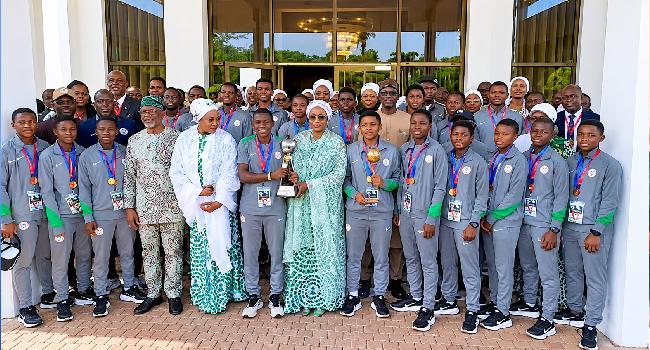
President Bola Ahmed Tinubu has rewarded every member of Nigeria’s victorious U-17 women’s national team, the Flamingos, with a ₦100 million Federal Government Savings Bond following their historic triumph at the 2026 FIFA U-17 Women’s World Cup in Morocco.
The announcement was made by First Lady Senator Oluremi Tinubu on Wednesday, November 11, when she received the players, coaches and other team officials at a special presidential reception at the State House in Abuja.
Under the reward package, the players will each receive a five-year savings bond valued at ₦100 million. The team’s head coach has also been allocated a reward valued at ₦100 million, while members of the technical crew are to receive ₦50 million each.
The presidential gesture comes after the young Nigerian footballers achieved a remarkable milestone, bringing home a FIFA world title that had eluded the country’s women’s teams at this age level.
Flamingos Make African Football History
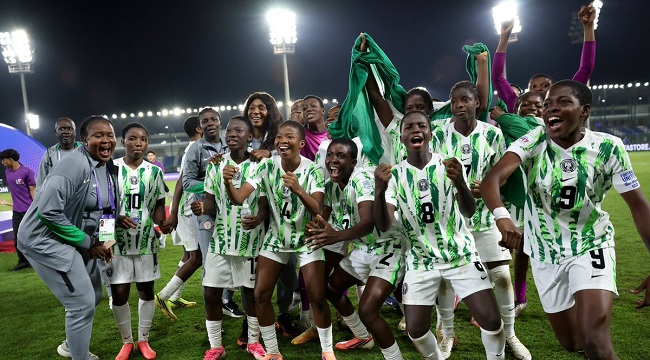
Nigeria’s Flamingos secured their place in football history on November 7, 2026, when they defeated Japan 2–1 in the final of the FIFA U-17 Women’s World Cup in Morocco.
Awawu Bashiru opened the scoring in the 39th minute before Oluebube Umejiaku extended Nigeria’s advantage shortly after the restart, finding the net in the 47th minute.
Japan managed to reduce the deficit through Fuki Ito in the 80th minute, but the Nigerian side held on to protect their lead and secure the championship.
The victory was significant beyond Nigeria’s borders. The Flamingos became the first African women’s national team to win the FIFA U-17 Women’s World Cup, delivering a landmark achievement for the continent.
It also added another major achievement to Nigeria’s impressive record in the FIFA U-17 competition, following the country’s five previous triumphs in the men’s tournament.
How Nigeria Fought Back to Become World Champions
The Flamingos’ journey to the championship was not without difficulties.
Nigeria began the competition with a 2–1 defeat to Poland, putting the team under early pressure. However, the young players responded positively, defeating Puerto Rico and defending champions North Korea to progress from their group.
Their impressive performances continued in the knockout rounds, where they overcame Mexico, Venezuela and Brazil to book their place in the final.
A convincing 3–1 victory over Brazil in the semi-final secured Nigeria’s first-ever appearance in the final of the competition.
They completed the remarkable campaign by overcoming Japan, turning an initially difficult tournament into one of the greatest achievements in Nigerian women’s football history.
Why Government Chose Savings Bonds for the Players
Chairman of the National Sports Commission, Shehu Dikko, explained that the decision to reward the young footballers through Federal Government Savings Bonds was deliberate.
According to Dikko, most members of the squad are still teenagers, and the government believes that investing the money on their behalf would serve their long-term interests better than handing them large amounts of cash immediately.
He explained that the five-year investment arrangement is expected to generate regular returns, providing financial support for the players’ education, football training and other personal needs.
Dikko also indicated that the investment would allow the players to benefit from the principal amount when the bonds mature, by which time they would be older and better positioned to make important financial decisions.
He stressed that the arrangement was intended to protect the young champions from the possible challenges of managing substantial sums of money at an early stage of their lives.
The NSC chairman described the presidential decision as an unprecedented form of recognition for the country’s young sporting talents.
NSC to Determine Players’ Future in the Next U-17 Cycle
Beyond the financial rewards, attention is also turning to the future of the Flamingos and the possibility of retaining some members of the victorious squad for the next FIFA U-17 Women’s World Cup cycle.
Dikko said the National Sports Commission would assess the players’ ages and eligibility before determining which members of the current team could continue in the next cycle.
The assessment will help establish the players who remain eligible for the age-grade competition, while others will eventually progress to higher levels of women’s football.
For the Flamingos, the historic victory in Morocco represents more than a trophy. It is a major breakthrough for Nigerian women’s football and a reminder of the potential within the country’s youth development system.
With their World Cup achievement now attracting national recognition and substantial financial rewards, the young champions will hope their success inspires greater investment in women’s football and creates more opportunities for the next generation of Nigerian female footballers.